Reference guides, manuals, and technical notes to help you use and understand the HST Series and its accessories.
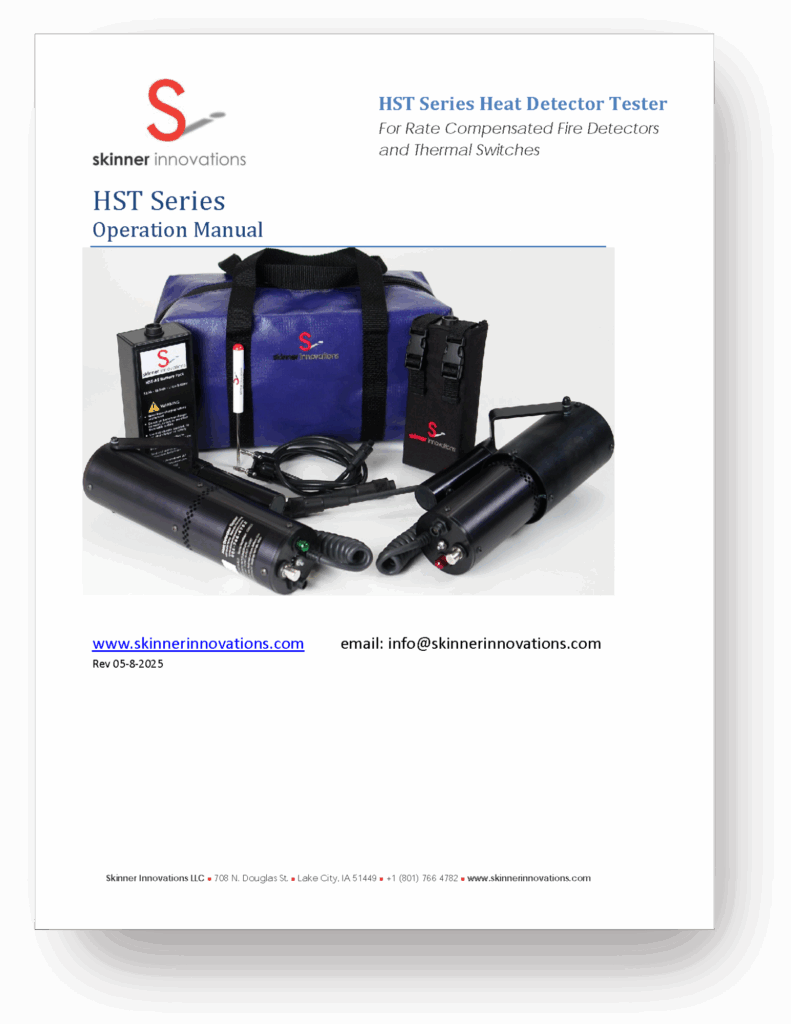
HST Series Operations Manual
The complete guide to setup, operation, safety, and maintenance for the HST Series Heat Detector Tester. This manual includes model configuration, assembly instructions, operating procedures, remote temperature output usage, troubleshooting, and safe handling of batteries and accessories. It also features detailed technical notes on rate compensation, optional rate control functionality, and model-specific testing guidance for detectors like Fenwal® 17343. Ideal for both new users and experienced technicians looking to verify detector performance in the field.
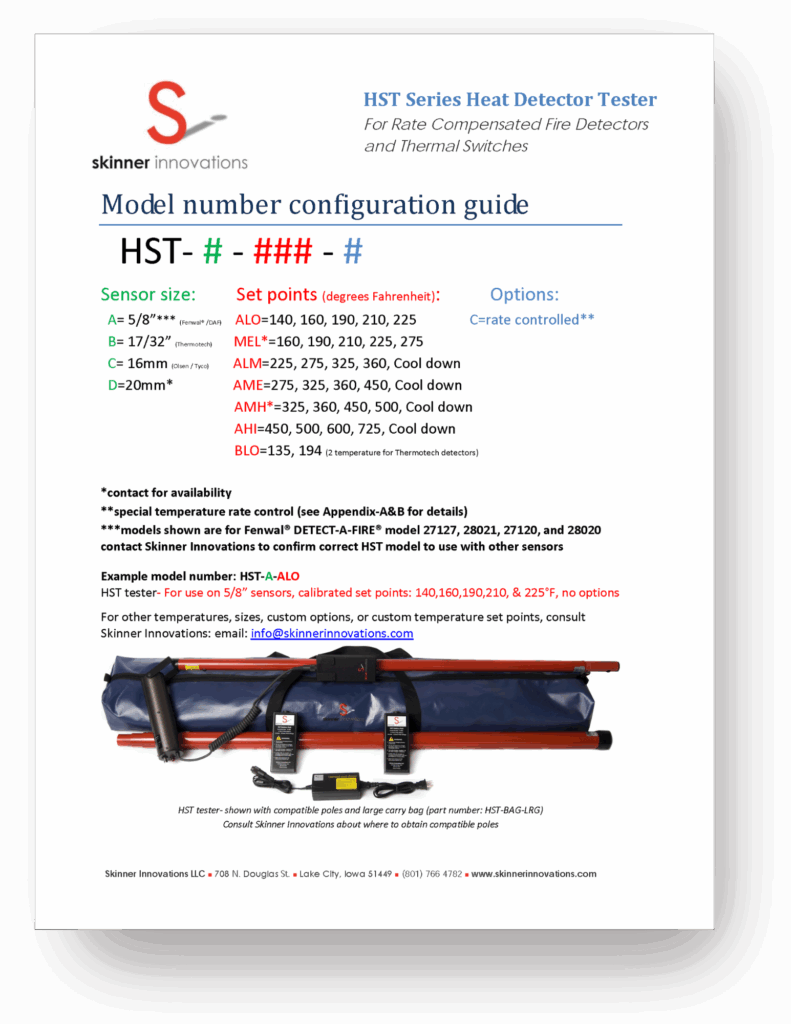
This guide explains how to interpret HST Series model numbers based on sensor size, temperature set points, and optional features such as rate control. It includes a breakdown of available configurations by detector type—including Fenwal®, Thermotech, Olsen, and Tyco—as well as guidance on how to request custom set points or confirm compatibility with your detector model.
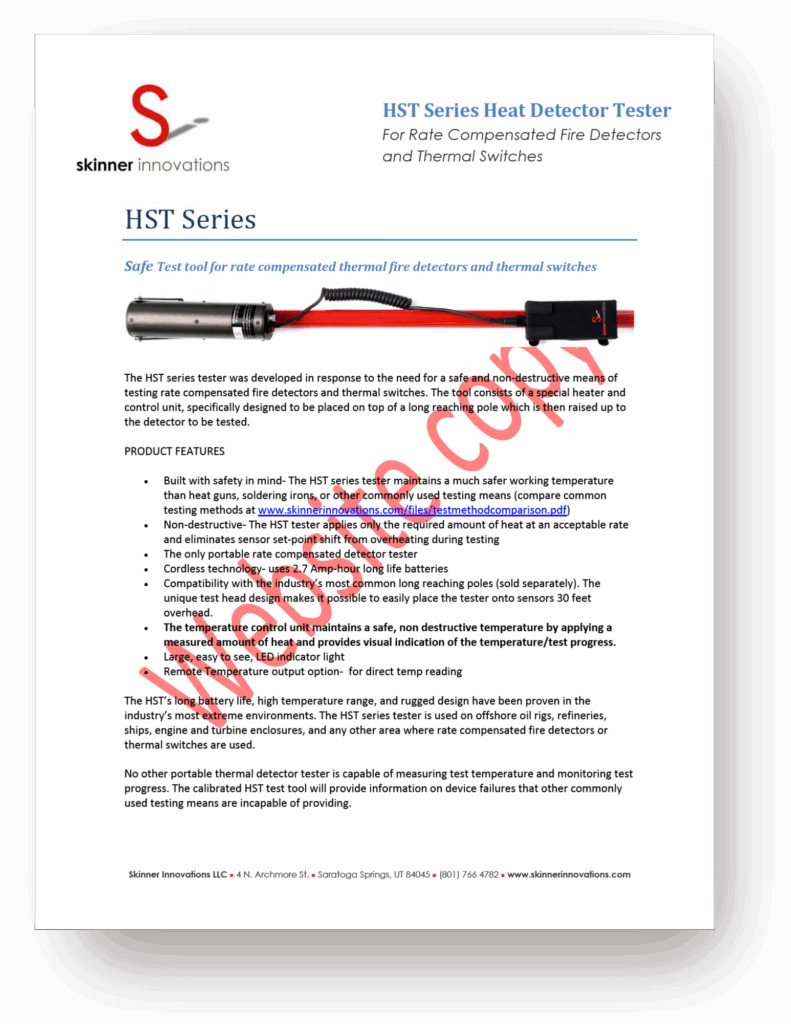
A comprehensive overview of the HST Series Heat Detector Tester and its accessories. This brochure introduces the system’s key benefits, including safe, portable, and non-destructive field testing, along with compatible models, extension poles, power options, and cable configurations. Ideal for sharing with decision-makers, procurement teams, or AHJs evaluating compliance tools.
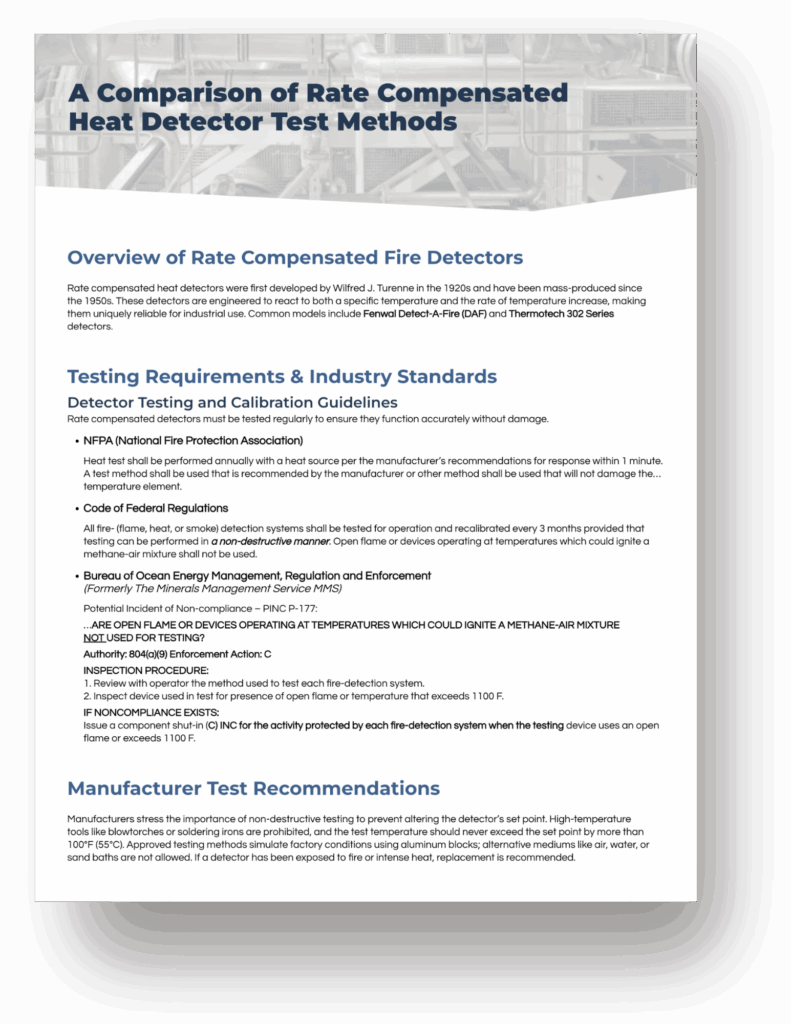
A Comparison of Rate Compensated Heat Detector Test Methods
This guide reviews the most common methods for testing rate-compensated heat detectors, including heat guns, friction, boiling water, soldering irons, and aluminum test block, and highlights the safety, accuracy, and practicality of each. It explains the risks of damaging detectors with uncontrolled heat sources and outlines why the HST Series offers a safer, more precise, and NFPA-compliant solution for field testing without removing the detector.
A Comparison of Rate Compensated Heat Detector Test Methods (PDF Version)
This printable PDF version of our testing methods guide offers a concise, field-friendly summary of common test tools and their limitations. It’s designed for technicians and inspectors who want a quick-reference format to support safe, accurate, and NFPA-compliant heat detector testing using the HST Series or other approved methods.
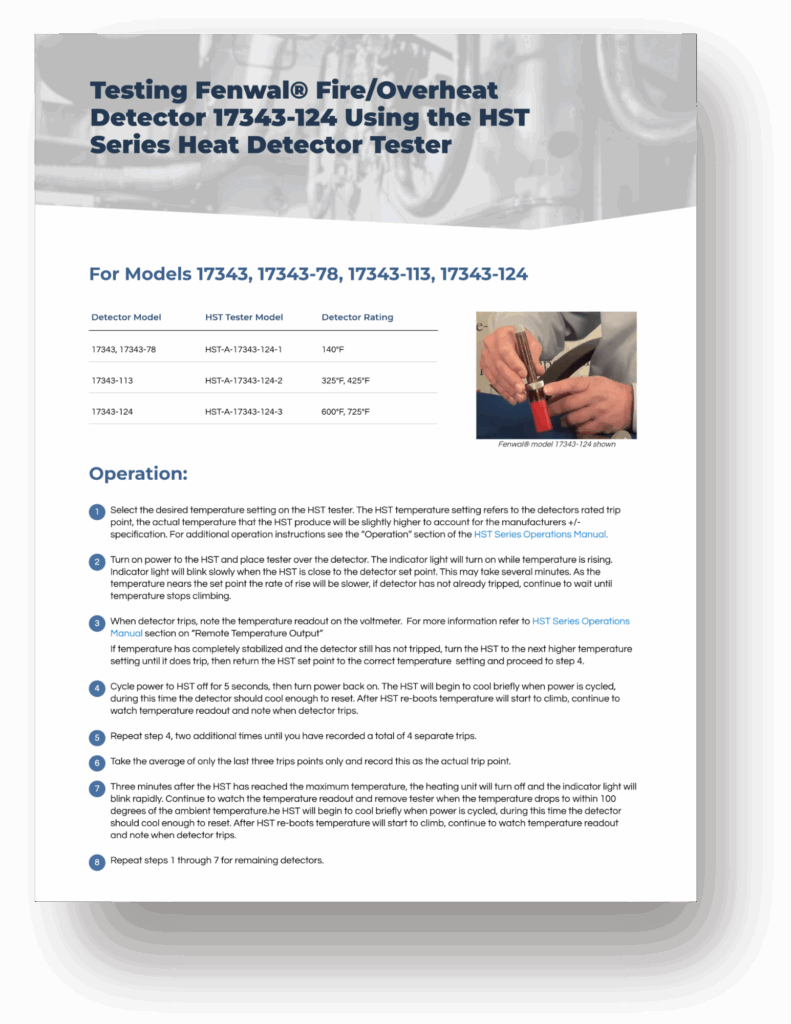
Testing Fenwal® Detector Series 17343 with the HST Series
Step-by-step guide for testing Fenwal® 17343-series fire/overheat detectors using the HST Series tester. Includes model selection guidance based on detector temperature rating (140°F to 725°F), instructions for capturing accurate trip point data, and interpretation recommendations. This method helps confirm detector consistency within manufacturer tolerance, without the need for lab calibration.
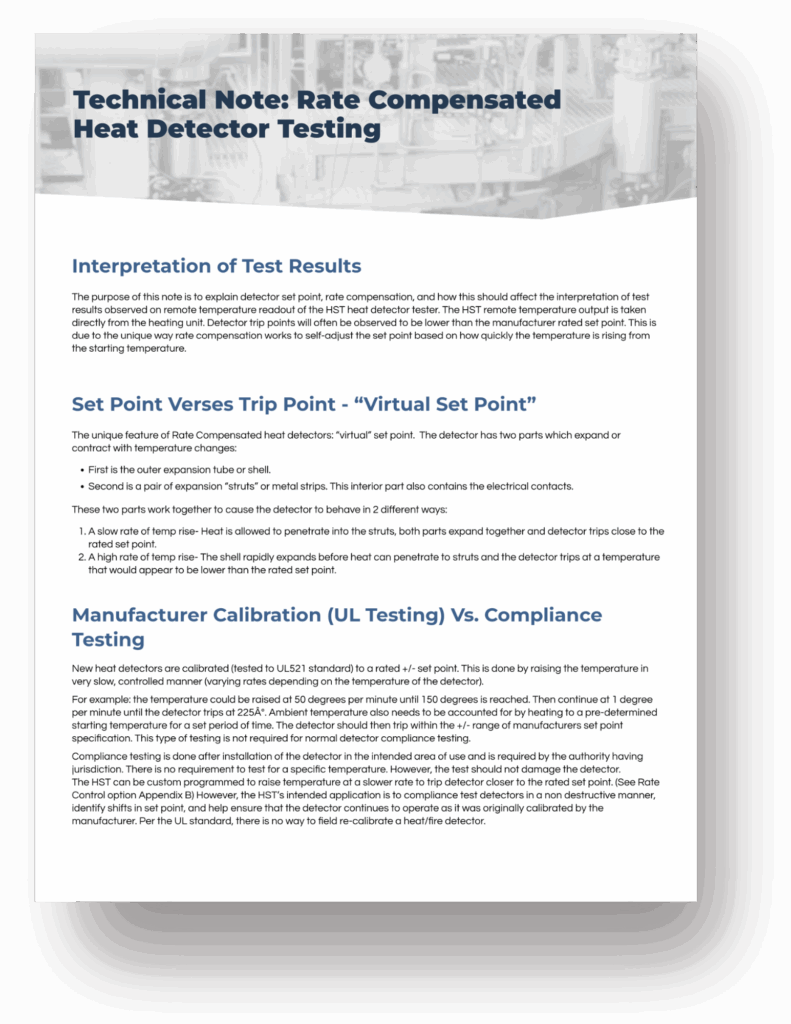
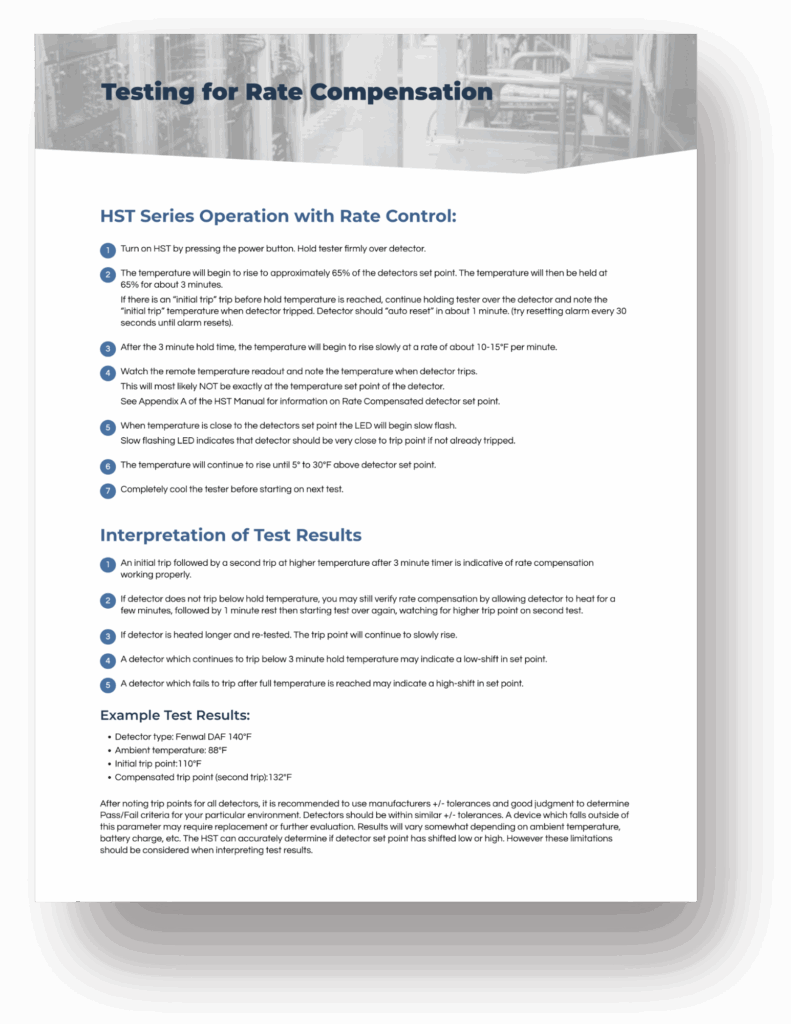
Learn how to verify the proper function of rate-compensated heat detectors using the HST Series tester. This guide explains how to observe both initial and compensated trip points, interpret test results, and identify potential shifts in detector set points. Includes a step-by-step walkthrough of the test process and example results.
This technical guide explains how to test rate-compensated heat detectors using the HST Series Heat Detector Tester with the Rate Control function. It outlines proper operation, how to interpret remote temperature readout data, and what to expect during a multi-stage test cycle. The guide also explains how rate compensation causes detectors to trip at lower temperatures when heat rises rapidly and how to identify detectors with set point shifts.
This Safety Data Sheet (SDS) outlines handling, storage, transport, and disposal guidance for Skinner Innovations’ lithium-ion batteries. The SDS includes chemical composition, emergency procedures, regulatory transport classifications (UN3481), and environmental precautions. It is intended for technicians, safety managers, and shipping personnel responsible for the safe use and transport of HST battery components.